
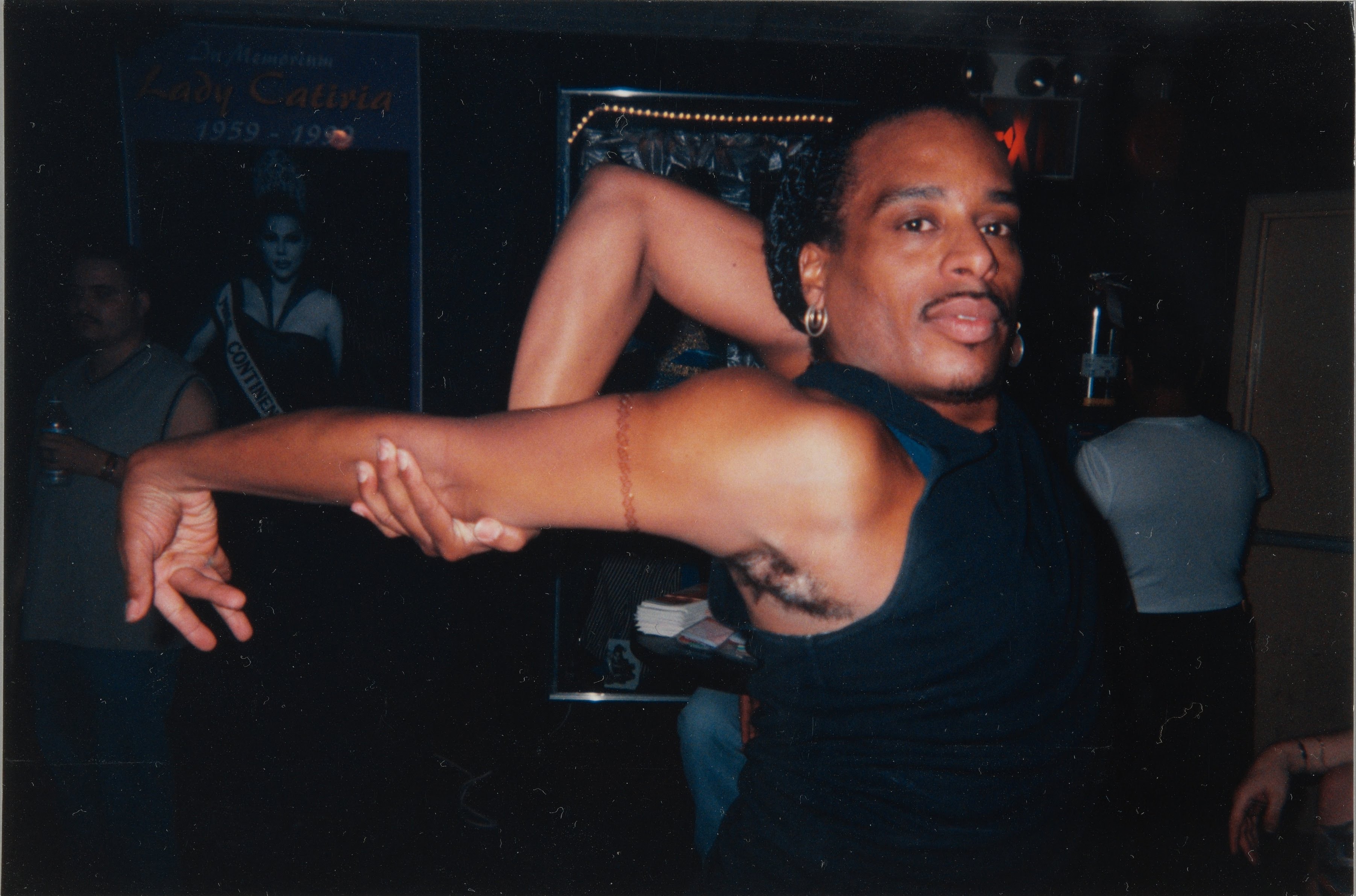
Welcome to the Evolving Man Project’s “Evolved Man of the Week” profile. Each week we will highlight an individual that embodies what it means to be an evolved person, famous and non-famous individual alike. The world needs to know their stories and deeds. This week’s honor goes to the New York Native, dancer, choreographer, and ballroom icon, Willi Ninja.
Willi Ninja was born William Roscoe Leake on April 12, 1961, and grew up in Flushing, Queens. A self-taught dancer, Willi began to dance publicly at age 7. After high school, Willi dropped out of college, enrolled in beauty school, and moved to Greenwich Village in the late 1970s. Not much is known about his childhood, although in many interviews, he describes how his mother, Esther Leake, was very accepting of his sexuality and directly nurtured his interest in dancing. Esther often took Willi to the ballet and the Apollo Theater to see various dance performances.
In an interview with Joan Rivers, Willi describes how he never came out to his mother about his homosexuality; in fact, she confronted him, claiming that “mothers always know.” She told him that he was her son and she would love him no matter what. Presumably having some sort of acceptance, Willi’s experience stands in stark contrast to the lives of the African American and Latino gay and transgender youth he later mentored. Inspired by Fred Astaire, Olympic gymnasts, and martial arts (hence the name “Ninja”), Willi formed a dance group that called themselves the Video Pretenders in the early 1980s. They would go to clubs and mimic the dance moves in the music videos on the screens. They soon realized that they should create their own choreography. Willi began voguing at the Christopher Street Pier and Washington Square Park, popular hangout sites for LGBTQ youth and debuted in Harlem’s famous drag balls.
Throughout his life, he was known for presenting an androgynous gender to the world and helping to dissolve gender boundaries. He participated in Harlem’s drag balls with “children” from his House of Ninja. Like other ball houses, the House of Ninja was a combination of extended social family and dance troupe, with Ninja as its Mother. He taught his children late into the night on the old Christopher Street pier and at the underground clubs.
Ninja was a featured dancer in many music videos, including Malcolm McLaren’s “Deep in Vogue” and “I Can’t Get No Sleep” by Masters At Work featuring India. In 1994, he released his single “Hot” (another Masters At Work production) on Nervous Records. Ninja’s later career included runway modeling for Jean-Paul Gaultier, performing with dance companies under Karole Armitage, and instructing Paris Hilton on perfecting her walk. He opened a modeling agency, Elements of Ninja, in 2004 and appeared on Jimmy Kimmel Live!. Ninja was also prominently featured in the 1990 documentary Paris is Burning and the 2006 documentary release How Do I Look, directed by Wolfgang Busch.
Ninja also danced in two of Janet Jackson‘s videos from her album Rhythm Nation 1814, including “Alright,” whose remix featured late rap star Heavy D and cameo appearances by Cab Calloway, Cyd Charisse, and The Nicholas Brothers. He also was featured in “Escapade.”
Ninja worked hard to care for his mother, Esther Leake, who had Parkinson’s and used a wheelchair. Her trips with Ninja to the ballet and the Apollo inspired his later endeavors in dance.After succeeding in his dream of traveling the world, Willi Ninja never lost touch with the drag ball scene. He was instrumental in getting the ballroom scene to discuss HIV/AIDS prevention throughout the 1980s when it was not discussed in the gay community because of social stigma and anxiety, making it a habit to split time between performing and community engagement. He was diagnosed with HIV in 2003 and continued working to support his elderly mother while not being able to afford healthcare for himself. He continued mentoring upcoming dancers and models until he lost sight and became paralyzed. Willi Ninja died of AIDS-related heart failure in New York City in 2006 at the age of 46, surrounded by the children of his house.
He continued to provide an outlet for self-expression in the queer community until the end. The House of Ninja continues to perform at drag balls to promote HIV/AIDS awareness in their mother’s name. Today we honor Willi Ninja as our Evolved Man of the Week.

 Evolving Folks Project