
If Ya Smell…
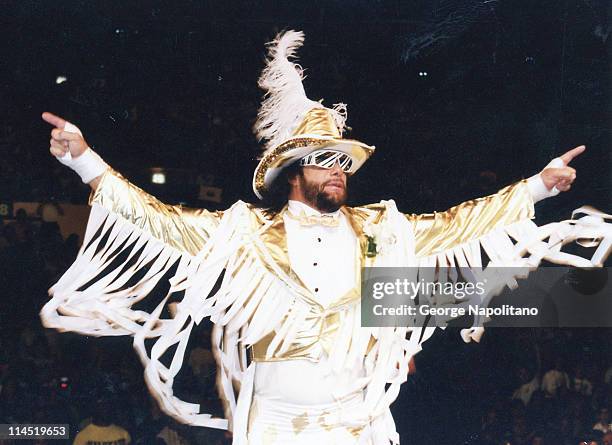
On a random Saturday morning in Chicago’s Southside, I witnessed a larger-than-life figure dressed in outlandishly bright colors on TV when I was five. It changed everything for me. Randy Savage, aka the Macho Man, was on my parents’ television. It would begin my lifelong obsession with the beautiful madness that is pro wrestling.
The 1980s, my birth decade, was a golden age of wrestling that I fondly remember. Hulk Hogan, The Million Dollar Man, The Ultimate Warrior, and Ric Flair dominated the squared circle in those glory days of pro wrestling. It was a time of larger-than-life characters and epic battles that still resonate with fans today. Throughout my childhood and teens, I lived through the Attitude Era, pro wrestling’s most popular time. Despite their wildly inappropriate and problematic nature, ECW, WCW, and the WWF were must-watch TV in those days. WWE’s arrival on Netflix marks pro wrestling’s evolution into a modern, cinematic experience.
They’ll say, “Lornett, you’re smart and intelligent,” folks will claim. “Why would you watch that trash? You know it’s fake, right? It’s utterly ridiculous. It’s like a soap opera, but for men. You know it’s for poor white trash.” Pro wrestling is criticized for its predetermined outcomes. Well, news flash to the haters. Pro wrestling enthusiasts know the matches are predetermined. We all know it’s a work. We’re privy to the information. There’s no difference between pro wrestling and your favorite dramatic series. Many people know Ice-T played a cop for over two decades on Law and Order: SVU, but he’s not a real-life police officer. Wrestling doesn’t differ from reality TV shows, but the difference between pro wrestlers and the Kardashians. The pro wrestlers actually have talent. Sorry, Kim K.
Yes, I’m a fan of the wrasslin’. If it makes me a nerd, so be it. Since I’m in my 40s, I don’t really care. There are tons of people who enjoy the art of pro wrestling. Modern absurdist theater, but for the average person, is pro wrestling. Pro-wrestling’s simplistic approach to storytelling is its charm. It’s not just about the physicality but the intricate narratives that unfold in the ring. It includes both heroes and villains. There’s jealousy, betrayals, overcoming the odds, failure, and backstabbing, all the elements of an intriguing story.
Glamor and spectacle are hallmarks of professional wrestling, its pure entertainment—a theatrical performance presented as a sport. Fans remain interested regardless of predetermined results. In the end, pro wrestling fully commits to its over-the-top nature. Yes, professional wrestling is utterly ridiculous, but it’s also incredibly entertaining. The larger-than-life characters, the dramatic storylines, and the adrenaline-pumping action all contribute to its appeal. All one must do is watch the KofiMania storyline that reached its zenith at WrestleMania 35. The epic showdown of Kofi versus Bryan Danielson, aka Daniel Bryan. The drama and passion of this match led to one of WrestleMania’s most feel-good wins in pro wrestling history.

The Fundamentals of Pro-Wrestling
Here are some basic terms and theories if you’ve never seen pro wrestling. There are some key things to understand when becoming a pro wrestling fan. The world of pro wrestling uses specialized language to discuss its staged athletic contests.
Face: The good guy. The wrestler playing this character receives fan support. Your white meat baby face reminds me of Cody Rhodes or John Cena, also known as Goodie Two Shoes. Alternatively, underdog wrestlers such as Bryan Danielson, Kofi Kingston, and Sami Zayn captivated wrestling fans through sheer grit and dedication. Then you have the anti-heroes like Stone Cold Steve Austin or Dwayne “The Rock” Johnson, who blur the lines of good and evil. They take their actual personality and dial it up to eleven.
Heel: This is a bad guy. The fans can boo and jeer. Sometimes, a wrestler will play a heel role so well that they become a face like the “Heartbreak Kid” Shawn Michaels or Razor Ramon, aka Scott Hall. Dominant world champions often come from the ranks of heels, for example, Brock Lesnar, The Undertaker, and NXT’s Oba Femi. The Miz, MJF, and the legendary Ric Flair represent slimy cowards among the heels. Stone Cold Steve Austin’s heel turn in his WrestleMania 17 main event match with The Rock closed the chapter on the Attitude Era. By forming an alliance with his longtime nemesis, Vince McMahon, Austin cheated to beat The Rock by hitting him with a steel chair. That was a hugely important heel turn in recent history.
Kayfabe: This is the term for the carefully maintained deception in pro wrestling that presents a staged performance as genuine competition.

Jobber: Professional wrestling uses “jobber” to denote wrestlers who regularly lose to more established wrestlers. Because of its negative connotation, most promoters avoid using the term. Since the 1950s, jobbers have been a popular promotional tool in the United States and Canada.
Gimmick: A wrestler’s gimmick is their crafted in-ring personality, combining characteristics, clothing, and actions to engage fans; it’s their on-screen identity, either rooted in reality or entirely invented.
Heat: Although often viewed as a negative audience response in professional wrestling, “heat” also signifies backstage disapproval from colleagues and/or management. Actual and perceived injustices alike can fuel backstage animosity.
Work: The wrestling term “work” is pivotal, influencing many aspects of professional wrestling. The convincing execution of signature moves (“working”) is crucial for a wrestler’s finishers, boosting the drama and storytelling of the match. High-flying wrestlers’ success relies on “working” the crowd, which is vital for their acrobatic feats. A wrestler’s heel turn involves a calculated shift in persona, demanding they convincingly portray this new character to influence audience reactions. While scripted elements define “work,” it also encompasses safety, including concussion prevention during intense matches and the safe execution of moves such as a Northern Lights Suplex.
A Brief History of Pro-Wrestling
Early Days (1800s-Early 1900s)
Origin of folk wrestling. Pro wrestling’s origins trace back to folk wrestling styles, including catch-as-catch-can. Abraham Lincoln, the 16th president, was a catch-as-catch-can wrestler with only one loss on his amateur record. Audiences grew bored with slow-paced, long matches as the sport transitioned from multi-hour matches to shorter “work’ matches during this period. The beginning of the 20th century saw wrestling on the brink of oblivion.
In the early 1900s, showmanship began and laid the basis for transitioning from actual shoot matches to work (predetermined) matches. Early promoters focused on showmanship and theatrics, intertwining sport and entertainment. Wrestlers also favored shorter, pre-arranged matches. This reduced wear and tear on aging athletes’ bodies. Many early pro wrestlers in fixed matches had legitimate wrestling and grappling backgrounds.
Pro-wrestling’s initial period saw it move from the carnival circuit to a system of territories. The foundational concepts behind wrestling, such as gimmicks, ring psychology, and storylines, were developed during this time period. A wrestler’s character and alignment (face or heel) could vary across different wrestling territories. Boxing’s legitimacy as a combat sport coincided with wrestling’s evolution in its current form. A pretend competitive sport masquerading as authentic. Television’s arrival would once again alter the pro wrestling industry.
Golden Age (1940s-1960s) the Television Era
The advent of television caused a massive increase in pro wrestling’s popularity. Regional promotions replaced territories. The dominant regional promotions were the Northeast’s WWWF (later WWF, now WWE), the Southeast’s NWA, and the Midwest’s AWA. The elevation of iconic pro wrestling stars, with wrestlers such as Gorgeous George, Buddy Rogers, and Lou Thesz, achieved widespread fame.
The Wrestling Boom (1980s-Early 1990s)
The WWF’s reign of power begins. With larger-than-life figures like Hulk Hogan, The Ultimate Warrior, Ric Flair, The Macho Man Randy Savage, and “Stone Cold” Steve Austin, Vince McMahon, a visionary yet problematic promoter, propelled the WWF to national recognition.
The Monday Night Wars, a ratings war between WWF and WCW featuring groundbreaking storylines and violent matches, forever changed pro wrestling. Both companies drew heavily from ECW, Paul Heyman’s independent wrestling promotion, including storylines, gimmicks, wrestling styles, and wrestlers. Wrestlers such as The Sandman, Sabu, Taz, Rob Van Damme, and The Dudley Boyz became stars thanks to this promotion. ECW’s rebellious style preceded and influenced the Attitude Era. The edgy content and anti-hero characters of WWF’s “Attitude Era” changed pro wrestling forever.
The Modern Era (2000s-Present)
The Global Influence of WWE. To reach a wider audience, what was once WWF (now WWE) shifted its focus to family-friendly sports entertainment, becoming a global force. That era witnessed a surge in the popularity of independent wrestling. Independent promotions like ROH, AEW, and TNA increased in popularity because of their unique approaches to storylines and wrestling styles.
The rise of the Women’s Revolution in pro wrestling dramatically altered the landscape from its early days, when female wrestlers faced inequality in respect, pay, and screen time compared to their male colleagues. Mainstream recognition for women’s wrestling came with the success of wrestlers like Trish Stratus, Lita, and Mickie James. Bayley, Sasha Banks, Bianca Belair, Rhea Ripley, Asuka, and Charlotte Flair (Rick Flair’s actual daughter) all became prominent wrestlers in the 2010s. Today’s pro wrestling scene features many women as top draws.

In fact, at WrestleMania 37, Bianca Belair challenged Sasha Banks for the SmackDown Women’s Championship in the main event. They were the first pair of African-American wrestlers to headline a WrestleMania event.
Pro-Wrestling as a Global Force
Lucha Libre: A Mexican Tradition
Mexican Wrestling, also known as Lucha Libre, is a distinctive and cherished professional wrestling tradition with roots in the early 20th century. Its defining features include high-flying aerial maneuvers, colorful masks, and dramatic storytelling. It followed a different path than US pro wrestling, starting its own evolution in the 1930s.
There are several key distinctions between Mexican Lucha Libre and American pro wrestling. Elaborate masks, sacred symbols representing wrestlers’ alter egos, are a frequent sight. Losing a mask can severely damage a wrestler’s professional life. The emphasis is on high-flying action. Lucha Libre is known for its spectacular aerial moves, such as the tope suicida (diving crossbody) and the plancha (diving splash). The main focus is on the heroes versus villains narrative. In lucha libre, heroic técnicos (good guys/faces) constantly clash with villainous rudos (bad guys/heels). In Lucha Libre, tag team matches are a popular format. Many matches feature tríos, or three-person teams.
Major Promotions in Mexico. Consejo Mundial de Lucha Libre (CMLL) is a world leader in established and prestigious promotions. AAA Worldwide focused on younger, high-flying wrestlers and a more extreme style is its signature. Mexico’s most famous wrestlers throughout history. El Santo achieved legendary status in Lucha Libre. Another iconic masked wrestler is the Blue Demon. Blue Demon’s hard-hitting style, fierce rivalries, and film career made him well known. Místico/Rey Mysterio is an internationally famous high-flying wrestler from Mexico and the US.
Lucha Libre’s unique blend of athleticism, drama, and spectacle keeps it a cherished form of entertainment in Mexico and internationally. It’s also impacted pro wrestling in both the US and Japan. Luchadors in Mexico achieved legendary fame, much like sports icons such as Mike Tyson, Michael Jordan, and Muhammad Ali in the United States. Mexico’s second most popular sport is Lucha Libre, trailing only soccer in popularity.

Puroresu: The Unique World of Japanese Pro Wrestling
Puroresu, professional wrestling in Japan, captivates fans worldwide with its distinctive style. The matches are intense and physically demanding, showcasing technical prowess and dramatic storytelling.
Puroresu’s key traits differentiate it from US wrestling. Realism, stiff strikes, and hard-hitting maneuvers are hallmarks of Japanese strong-style pro wrestling. Technical wrestling emphasizes precise grappling techniques to secure submissions. The high-flying action includes spectacular aerial maneuvers like moonsaults and springboard dives. Compelling storylines with heroic figures, villainous heels, and intense rivalries make for dramatic storytelling.

Significant Japanese promotions. People know NJPW for its strong style, technical wrestling, and high-flying action. Among NJPW’s many legendary wrestlers are Antonio Inoki, Tatsumi Fujinami, and Hiroshi Tanahashi. AJPW’s style combines technical wrestling with powerful brawling. AJPW’s roster has included legendary wrestlers such as Giant Baba, Mitsuharu Misawa, and Kenta Kobashi.
Wrestlers who are icons of Japanese wrestling scence. Antonio Inoki is a puroresu trailblazer. Inoki’s unique style and passion for mixed martial arts revolutionized the industry. Legendary wrestler Mitsuharu Misawa was famed for his powerful strikes and devotion to professional wrestling. Many frequently rank Hiroshi Tanahashi among history’s best wrestlers. Tanahashi’s charisma and high-flying skills defined him.
Puroresu has significantly impacted the global wrestling scene, influencing the styles and techniques of wrestlers worldwide. It continues to be a beloved form of entertainment in Japan and beyond.
European Pro Wrestling: A Diverse Landscape
Pro wrestling in Europe has a deep history, with many styles and promotions developing throughout the continent. Despite lacking the global presence of American or Japanese wrestling, it maintains a loyal following and a unique character.
There are some notable styles and promotions. British wrestling is famous for its technical wrestling, hard-hitting strikes, and fierce rivalries. Legendary wrestlers like Mick McManus and Big Daddy came from promotions, including the World of Sports Wrestling and All-Star Wrestling. An influential tradition in German wrestling is catch-as-catch-can, prioritizing technical skill and submission holds. French wrestling merges technical wrestling’s precision and high-flying action, often drawing inspiration from lucha libre. Scandinavian wrestling combines technical wrestling skills with powerful brawling, highlighting athletic, and strong performers. Though a newer phenomenon, the popularity of Eastern European wrestling is on the rise, particularly in Poland and Russia.

Prominent European wrestlers. William Regal is a master technician in the ring, famous for his hard-hitting style and complex grappling. WWE’s Walter (Gunther) is a dominant force, renowned for his powerful strikes and imposing physique. The famed “Eighth Wonder of the World,” André the Giant (André René Roussimoff), was a French professional wrestler and actor. WWE’s Drew McIntyre, known as “The Scottish Warrior,” is a Scottish-American professional wrestler. He’s renowned for his impactful moves, fiery personality, and close connection with the WWE Universe. Although European pro wrestling isn’t as mainstream as American or Japanese wrestling, it flourishes thanks to devoted fans and skilled wrestlers.
A Beautiful Madness
Many iconic pro wrestlers I’ve discussed achieved significant mainstream success outside professional wrestling. Post-college, Dwayne “The Rock” Johnson’s football career in Canada ended unsuccessfully, leading him to an alternative path. In the mid-90s, he followed in his father’s footsteps into the wild world of professional wrestling. The Rock would become one of the most legendary pro-wrestling personalities in history. Hollywood stardom followed his initial success, making Dwayne “The Rock” Johnson one of the world’s most famous and highest-paid actors.
The successful acting careers of Dave Bautista and John Cena show a viable post-wrestling path for pro wrestlers. A career in pro wrestling can easily translate to acting in television and movies. All three men starred in highly successful film franchises like the MCU, DCEU, Dune, and the Fast and Furious series. Their achievement will pave the way for other wrestlers exploring different career options.
Just like other forms of entertainment, pro wrestling is not without its problems. Fabulous Moolah, a legendary female wrestler, was infamous for allegations that she exploited young wrestlers financially, taking a substantial cut of their income and forcing them into unfair agreements. Moolah has faced accusations of sexual harassment and abuse from some wrestlers by pimping out female wrestlers to their male counterparts. Women wrestlers from Moolah’s era frequently described their experiences with poor working conditions and inadequate compensation.
WWE’s longtime CEO and Chairman, Vince McMahon, has faced many controversies during his tenure. However, the most serious and recent scandal centers on claims of sexual misconduct and payments made to silence multiple women. McMahon created storylines that exploited racial stereotypes, sexism, and homophobia.
Unlike other professional athletes and actors, pro wrestlers lack a wrestlers union. Hulk Hogan threw his former friend and fellow wrestler Jesse ‘the Body’ Ventura under bus getting him fired. All because Jesse wanted to unionize the WWE wrestlers. Hogan wanted to protect his top spot on the card. Hogan’s actions alone make him a terrible person, but there’s other reasons to dislike the hulkster as a human being. Major wrestling companies classify wrestlers as independent contractors. This remains worker exploitation because major wrestling companies do not consider independent contractors full-time employees. Thus, major wrestling companies do not provide independent contractor wrestlers with the benefits and rights afforded to full-time employees. Some might say that independent contractors allow pro wrestlers to work for various promotions because contracts don’t bind them. This is inaccurate; exclusive contracts often bind wrestlers in WWE, AEW, and other promotions.
Many professional wrestlers have athletic backgrounds, such as football, soccer, powerlifting, mixed martial arts, and basketball. Kurt Angle’s celebrated amateur wrestling career culminated in a gold medal victory at the 1996 Olympic Games. He would go on to become one of the most accomplished and renowned pro wrestlers of his era.
Brock Lesnar’s pro wrestling career started in the early 2000s. Still, before that, he was a multiple-time collegiate NCAA wrestling champion. He also competed in the world’s biggest MMA organization, the UFC, and won its Heavyweight Championship. Charlotte Flair’s background includes NCAA volleyball and personal training before she became a wrestler. The legendary Monday Night War figure, Bill Goldberg, played professional football in the NFL and CFL, but injuries cut his career short.
Although professional wrestling is staged, it remains a physically demanding and risky sport. Wrestlers work hard to minimize injuries by dedicating years to training and conditioning. Strength, endurance, and flexibility are crucial for professional wrestlers. They must also convincingly portray grappling holds, submissions, suplexes, and strikes while ensuring no one gets hurt.
Thanks to their extensive training, wrestlers perform moves safely and efficiently. A successful pro wrestling match requires communication and rehearsal. Communication and coordinated spotting of moves ensure safety in wrestling. Wrestlers’ practice, or rehearsal, is crucial for perfecting the timing and execution of moves.In pro wrestling, ring safety is critical. High-quality wrestling mats are vital because they offer cushioning and lessen the impact of falls. For pro-wrestler safety, it’s essential to have proper ring ropes and turnbuckles.
Events have medical staff on hand to treat injuries quickly. Professional wrestlers also receive routine physical check-ups to track their well-being. Fans and wrestlers have questioned the WWE Wellness Program, established in 2006 in response to wrestler Eddie Guerrero’s death. Critics argue the policy is ineffective against WWE’s biggest stars because of many loopholes.
WWE’s Wellness Program tests wrestlers for drugs, alcohol, and heart problems. WWE drug tests its wrestlers to detect recreational drug use, prescription drug abuse, and performance-enhancing drugs. Testing happens randomly or if there’s reasonable suspicion. WWE mandates yearly cardiac screenings for pro wrestlers to detect existing or emerging heart problems. Suspension and rehabilitation program admission are consequences of Wellness Program infractions.
Mutual respect between pro wrestlers is crucial for delivering competitive, exciting matches that thrill fans. This requires trust and teamwork. Wrestlers depend on one another for safe move execution. Wrestlers mustn’t engage in reckless behavior. They prioritize their opponents’ well-being and avoid taking unnecessary chances.
Despite planned matches, pro wrestlers can still suffer injuries. During a live show, a stunt accident led to the death of wrestler Owen Hart. Countless wrestlers have suffered from career-ending injuries because of a botched move or performance. The industry, however, now prioritizes safety and harm reduction.
On the bright side, today’s wrestling world features a diverse roster. Today’s pro wrestling features wrestlers from diverse backgrounds and cultures. American pro wrestling combines athleticism with showmanship. Pro wrestling has adapted considerably to evolving times and audience preferences. Globally, it continues to be a beloved form of entertainment, boasting a loyal following across many countries.
People can look at pro wrestling as a fraud, but the great thing is that the fans are in on the work. A mix of sports and theater makes for an entertainment option, available on TV or in person. The fans are just as important as the performers. It’s a symbiotic relationship; crowds can make or break a wrestling show whether a wrestler is a hero or villain, the fate of their gimmick lies in the hands of the fans. As a performing art, it responds to and represents contemporary culture. It’s constantly changing. People either appreciate pro-wrestling as a unique and wild art form, tolerate it, or find it ridiculous. While opinions may differ, I find it awesome. In fact, this is awesome!
 Evolving Folks Project