
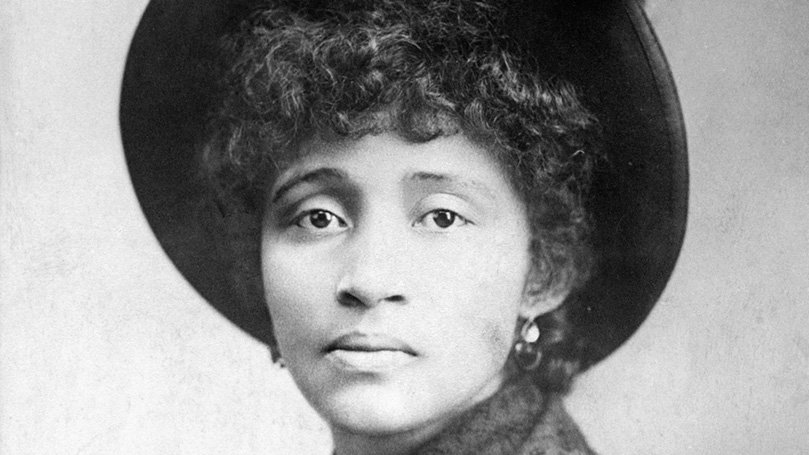
Welcome to the Evolving Folks Project’s “Evolved Woman of the Week” Black History Month Edition profile. Each week, we will highlight an individual who embodies what it means to be an evolved person, famous and non-famous alike. The world needs to know their stories and deeds. This week’s honor goes to the legendary and historically controversial anarchist activist and labor organizer (1851–1942) Lucy Parsons.
Limited records obscure the origins of Lucy Parsons, born enslaved in Virginia (probably of African, Native American, and Mexican descent), who, even during her life, claimed Mexican or Indigenous heritage and used multiple aliases. Some scholars believe she was the child of an enslaved mother and a slave-owning father.
Albert Parsons, her husband, was a white man who had once been a Confederate soldier but later became a radical abolitionist and labor activist. The failed Southern Reconstruction altered the political landscape, derailing Albert Parsons’ political ambitions in the South. To escape the Jim Crow laws, the mixed-race couple took action. They expected to improve their fortunes by moving up north. They moved to the booming metropolis of Chicago. Chicago became their new home and had a significant impact on the labor movement.
Lucy Parsons would become a prominent figure in the anarchist and labor movements of the late 19th and early 20th centuries. She co-founded the International Working People’s Association (IWPA), which advocated for workers’ rights and revolutionary change. Parsons was a forceful speaker and writer. She used her platform to address class struggle, poverty, and exploitation.
The 1886 Haymarket Affair in Chicago, a key moment in labor history, brought Lucy Parsons widespread recognition. A bomb thrown at a labor rally led to a trial and the execution of several anarchists, including her husband, Albert Parsons. Despite facing tragedy, Lucy Parsons’ continued activism embodied resistance and resilience.
Following her partner’s funeral, Parsons persevered in her political activism. A weekly stipend of $12 from the Pioneer Aid and Support Association enabled her to tour the East Coast, giving speeches in March 1888. In the 1887 Chicago mayoral election, Parsons backed the United Labor Party’s candidate, who lost to Republican John A. Roche. In Roche’s framing, the contest pitted the US flag against anarchist and communist flags, leading to a later attempt to ban red flags at left-wing meetings.
Parsons started work on a book later published, The Life of Albert R. Parsons. In 1889, she received help from Martin Lacher, a young German who lived with her. During her October 1888 trip to London, she encountered anarchists Peter Kropotkin and William Morris and toured the Tower of London and Westminster Abbey with Jane Morris. At a Socialist League meeting, a violent dispute arose between her and Annie Besant. They were on their way to the match girls’ strike. A founder of The Liberator newspaper, she wrote prolifically about anarchism, labor rights, and social justice.
While the city’s Black community expanded, Lucy Parsons and white radicals overlooked the hardships faced by Black residents. While reluctant to offer support, they believed black workers should stand in solidarity and not break the strikes. Her inattention to Black concerns is a reason for Parsons’ lesser-known status among other famous activists of the period. Later in her life Parsons remained active in labor and anarchist circles, taking part in organizations like the Industrial Workers of the World (IWW).
Parsons’s recovery from pleurisy in 1932 allowed her to attend the Chicago World’s Fair in 1933. Though disheartened by the US anarchist movement’s failings, which she discussed with friends like Nord, she persevered in her activism, backing Angelo Herndon, Tom Mooney, and the Scottsboro Boys. In Avondale on North Troy Street, blind and pensioned Parsons lived in poverty amidst a 3,000-book library featuring Engels, French socialist writers, Hugo, London, Marx, Rousseau, Tolstoy, and Voltaire. A 1942 house fire took her life, yet her groundbreaking activism and ideas continue to inspire. She’s remembered for her passionate advocacy of justice and equality.
Parsons stressed the significance of class struggle, highlighting the necessity of worker unity against capitalist exploitation. Another of Parsons’ passions was women’s rights. She defended working-class women’s rights and challenged traditional gender roles. Anarchism was a core political philosophy for Parsons. Her belief system rejected all forms of oppression, hierarchy, and state and class structures. Here is Lucy Parsons in her own words:
Let the masses understand that these robbers hold this property (which is so much unpaid labor) under the plea of the laws which they themselves have made . . . and further, that these so-called laws would not be worth the paper they are written on, twenty-four hours after the producers of all wealth had willed it otherwise.
Today, Lucy Parsons’ life and work inspire activists working towards social, economic, and racial justice. Her life’s work powerfully illustrates the effectiveness of grassroots movements and radical thinking. Today, we honor Lucy Parsons as our Evolved Woman of the Week.
 Evolving Folks Project