
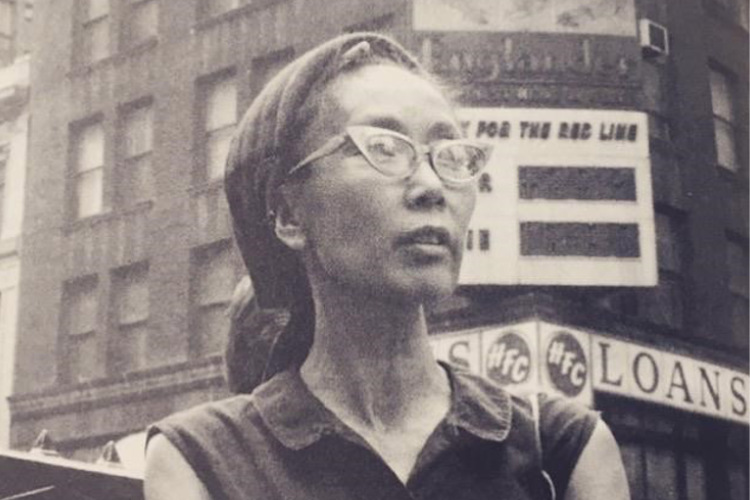
Welcome to the Evolving Folks Project’s “Evolved Woman of the Week” profile. Each week, we will highlight an individual who embodies what it means to be an evolved person, famous and non-famous alike. The world needs to know their stories and deeds. This week’s honor goes to Japanese American civil rights activist Yuri Kochiyama (1921–2014).
Born Mary Yuriko Nakahara in San Pedro, California. Her mother and father were both Japanese immigrants. Her father, Seiichi Nakahara, was from Iwate, while her mother, Tsuyako Sawaguchi, was from Fukushima. According to a family history compiled by Kochiyama’s cousin, Tama Kondo, and his wife, Mary Tama Kondo. Kochiyama’s father was the son of a retired samurai. He arrived in the United States in 1907, working first as an orange picker and then as a fish canner. All before opening a fish market and starting a business called The Pacific Coast Fish Company. Her mother was an English teacher and piano instructor.
Her life changed dramatically after the Japanese attack on Pearl Harbor in 1941. During World War II, Executive Order 9066 moved Kochiyama and her family, along with over 120,000 other Japanese Americans, to internment camps. This experience profoundly shaped her commitment to fighting racism and injustice.
During her time with the USO, Yuri encountered and fell in love with Bill Kochiyama, a Nisei soldier who would become her husband. They planned a 1944 wedding at Camp Shelby, Bill’s station. Despite this, Bill’s father insisted on meeting Yuri Kochiyama beforehand, delaying the wedding. Following this, Kochiyama’s work took her to the USO in Hattiesburg, Mississippi, and eventually to Nisei soldiers in Minneapolis, Minnesota. In 1945, Yuri and her family came home to San Pedro. Kochiyama moved to New York City on January 23, 1946, then married Bill three weeks later, on February 9, 1946.
After the war, Kochiyama moved to New York City, where she became involved in civil rights and social justice movements. She and her husband, Bill Kochiyama, were active in the Harlem community, advocating for racial equality and supporting Black liberation movements. She developed a close friendship with Malcolm X and was present at his assassination in 1965, holding him in her arms as he died. This event further deepened her activism.
Kochiyama’s work extended beyond the Black Liberation movement. She was a vocal advocate for Puerto Rican independence, Asian American rights, reparations for Japanese American internees, and political prisoners’ rights. She was also involved in anti-war and anti-imperialist movements, supporting causes in Vietnam, Palestine, and elsewhere.
The Japanese-Peruvian dictator Alberto Fujimori’s police force apprehended leader of the revolutionary group, the Shining Path, Abimael Guzmán in 1992. Initially, Kochiyama was wary of working with Shining Path, given the American left’s condemnation of their violent methods. Kochiyama stated that, upon receiving reading materials from RCP member Phil Farnham to learn about Peru, she became a staunch supporter of the revolution.
Later that year, on October 25, Bill died of cardiac complications. Then, after having a stroke in 1997, Yuri moved to Oakland to live near her family. In 2000, she moved to a retirement home, and in 2004, she published the memoir Passing it On, which discusses her early life, her time at the Jerome War Relocation Center, her friendship with Malcolm, and the deaths of her children. Kochiyama died in Berkeley, California, on June 1, 2014, at 93.
Kochiyama was driven to activism by h belief that struggles against oppression are all connected. Her dedication to social justice, human rights, and solidarity among marginalized communities brought her world renown. Generations of activists drew inspiration from her message on the importance of unity across racial and cultural divides. Her impact on global justice and equality movements persists. Today we honor Yuri Kochiyama as our Evolved Women of the Week.
 Evolving Folks Project