
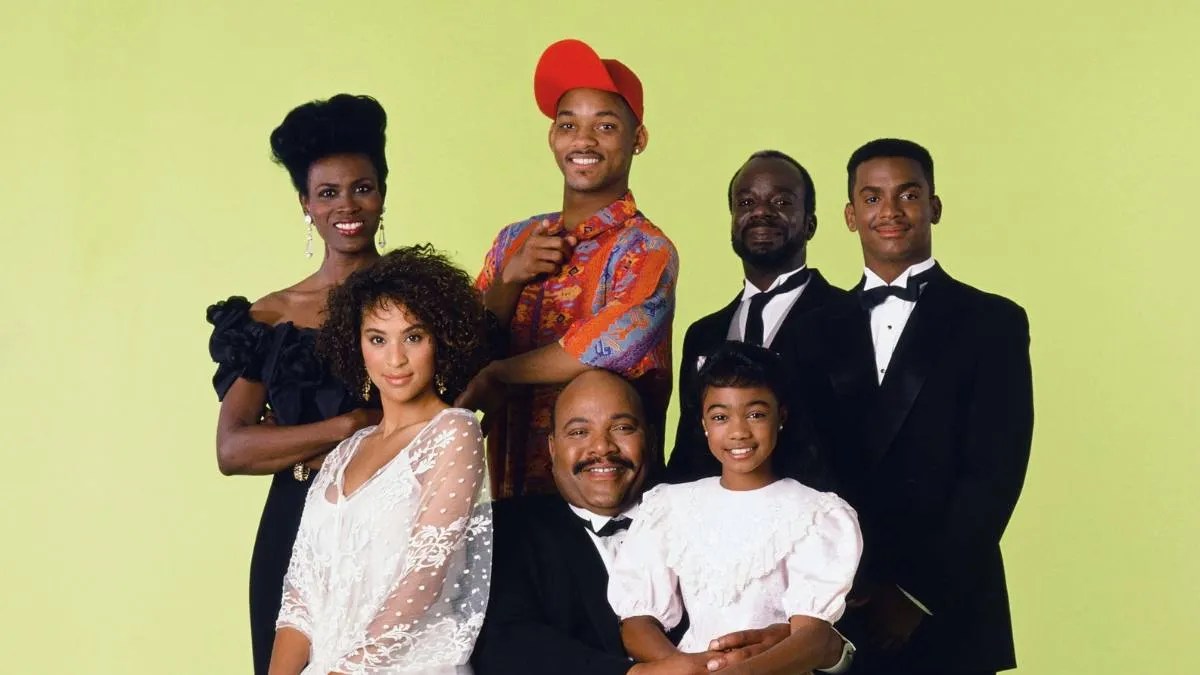
The 90s were a wild time in American history, but it was no doubt the golden age of black television. With sitcoms, black-led TV shows were used to build TV networks like NBC, The WB, Fox, and UPN. This was the heyday of black television. Unfortunately, issues of colorism found its way into some of the most popular black-led shows of that era. Before we get into it, let’s define colorism. Here are a couple of definitions and the historical context of colorism.
Colorism is a persistent problem for people of color in the USA. Colorism, or skin color stratification, is a process that privileges light-skinned people of color over dark-skinned people in areas such as income, education, housing, and the marriage market. – Margaret Hunter, Department of Sociology and Anthropology, Mills College
Another way to define colorism. Colorism in the United States refers to the discrimination or prejudice based on skin tone, typically favoring lighter skin over darker skin within the same racial or ethnic group. This form of bias has deep historical roots. It continues to affect social, economic, and political opportunities for people of color, particularly Black, Latino, Asian, and Indigenous communities.
Now that we’ve defined what colorism is and its historical context, let’s look at some of the 90s’ most popular black shows. Many of these shows gained a mainstream audience far beyond the borders of the United States. The shows I’ll look at are The Cosby Show, The Fresh Prince of Bel-Air, Martin,Malcolm & Eddie, and Living Single.
Family Matters
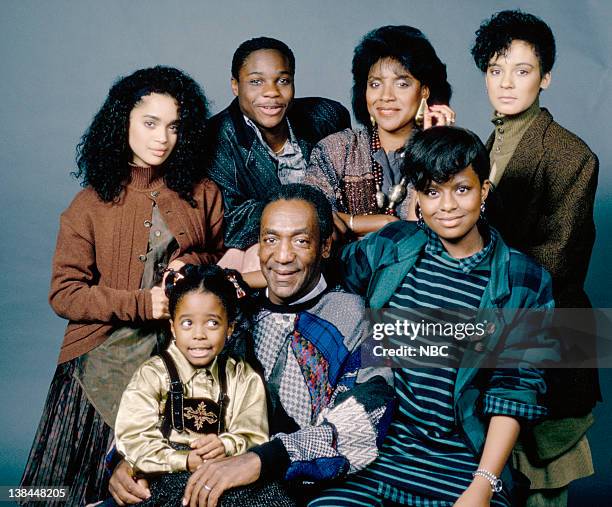
Unfortunately, comedian and actor Bill Cosby fell from grace (rightfully so) because of being a systematic sexual predator for decades. The Cosby Show stood as one of the most popular black-led shows of both the 1980s and 90s. For argument’s sake, we’re not gonna get into the legacy of Bill Cosby. However, many networks across the globe have pulled the series from syndication because of Cosby’s criminal and heinous actions.
If you’re a fan of the show or watched it in your youth, like I did in the 90s. You knew that Cliff and Claire Huxtable had five children: Theo, Vanessa, Rudy, Denise, and Sondra Huxtable. The thing you’d notice watching the first couple of seasons of The Cosby Show is that Sondra and Denise are very fair-skinned women. Sabrina Le Beauf and Lisa Bonet played the roles of both characters, respectively. As an older person, I would say that Claire was creeping on Cliff, because why did Denise and Sondra, her oldest daughters, come out biracial?
The actress who played Sondra, Sabrina Le Beauf, claims to be New Orleans Creole, which is a blend of French, Spanish, African, and Native American ancestry. Lisa Bonet is the product of a black mother and a white Jewish father. Neither actor, Bill Cosby nor Phylicia Rashad, is light-skinned or biracial black themselves. So how did they produce two biracial-looking children? Why did the producers think to cast their children as biracial, but pass them off as mono-racial black?
The Cosby Show wasn’t the only uber-popular black show in its era to do this, either. With the show Sister, Sister, Tia and Tamera were two biracial girls adopted by two monoracial black parents. Other shows never really explained biracial family members, and just hoped the audience wouldn’t question things. In the TV show with the most famous theme song in history, The Fresh Prince of Bel-Air. In The Fresh Prince, the title character, Will Smith, moves to Los Angeles from Philly to live with his Uncle Phil and Aunt Viv. Phillip and Vivian Banks have three children who are Will’s cousins: Carlton, Ashley, and Hillary Banks. The show offered plenty of hilarious moments and quotable lines. This also began the film career of Will Smith, the rapper and actor who became a top Hollywood star.
Actress Karyn Parsons played Hillary Banks, the Banks’ oldest daughter, to a tee. Karyn Parsons owned the thoughtful, but sometimes shallow and always stylish, role of Hillary Banks. However, as with the Cosbys, Aunt Viv must have been creeping with a whole ass white man. Actress Karyn Parsons, like Lisa Bonet, is biracial. My point isn’t that black families don’t have biracial or light-skinned family members. We do, but the original actors playing Uncle Phil and Aunt Viv are mono-racial black folks. Where the hell did Hillary come from then? Once again, show producers cast a biracial black child for a non-mixed-race black couple. It was weird that this happened on two of the most impactful black shows on television. Both these shows exhibited benign colorism.

Friends, how many of us have them?
The Fox hit 90s show Martin starred actor and comedian Martin Lawrence. It was one of my favorite shows as a kid and a teen. But rewatching the show as an adult, Martin was a terrible friend and boyfriend. Martin dated and married Gina Waters, portrayed by actress Tisha Campbell, who was light-skinned, and her best friend Pam, portrayed by actress Tichina Arnold, a brown-skinned black woman. In the show, Martin spent the entire series calling Pam names like horse-face or other unflattering names. Or he made fun of her hair being too nappy.
Gina was a terrible friend because she never called out her boo, Martin, for his cruel jokes. Or stood up for her friend. In the 90s, poking fun at a black woman for being well, black. It was a constant trend. Martin was even beside himself when his friend Tommy dated Pam in the series. How could this “ugly”, darker-skinned black woman find or be worthy of love? I know some reading this might say I’m reaching, but even if the show was funny. Martin was an asshole to Pam and also to his closest friends. It was total colorism of elevating Gina as the beautiful one and making Pam’s looks and hair the butt of the title characters’ jokes.
The trope didn’t include just the Martin TV show. In the show Malcolm & Eddie. Eddie Griffin’s character would always swerve and make jokes about his employee the character Nicolette Vandross, played by actress Karen Malina White. I was a preteen, but I thought Nicolette was quite attractive. Why wouldn’t Eddie want to get with her? I would have it if I were old enough. This was my thought process as a hormone-driven, horny teen. But it was because Nicolette was, without a doubt, a dark – skinned black woman. In an era, it was all about the fairer-skinned love interests, and no male characters made jokes about their appearances. Even on the show, Eddie and Nicolette became an item. But I would have told her she could have done better than getting with a dude who dissed her for multiple seasons.
The last show I’ll talk about is the black-ass show that the NBC hit sitcom Friends “borrowed” its entire premise from. That show is called Living Single, the show that launched the movie career of rapper and actress Queen Latifah. The show never reached the heights of Friends. In the show, Queen Latifah plays the lead, Khadijah James. She has a crew of female friends and roomies: Maxine Shaw, her cousin Synclaire James, and her broke but boujee friend Regine Hunter. They also had two male characters who lived in the apartment above them in Kyle and Overton.
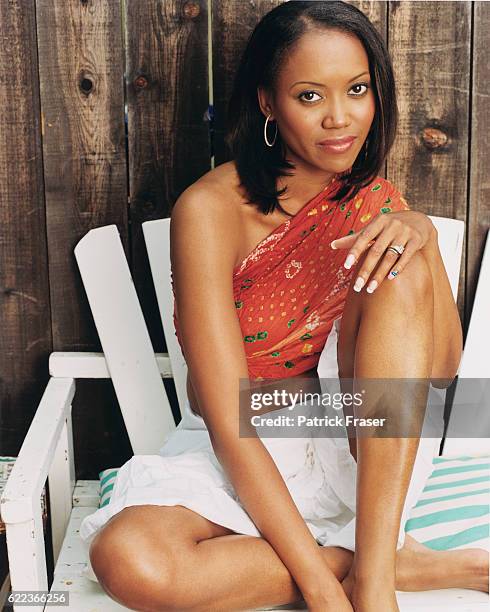
Kyle made it his mission to mock Maxine Shaw. The talented actress Erika Alexander played the character Maxine Shaw. Maxine was one of the darkest-skinned characters besides her nemesis, Kyle. Of course, they had the total cliché friends-to-lovers story arc. But also, as a pre-teen and a teen, I could see that Maxine was a total baddie. The actress Erika Alexander has aged gracefully, but in her youth, she was stunning. Of course, in many 90s TV shows, the darker-skinned woman would be the butt of the jokes.
If I thought these things as a boy, I could imagine the impact it had on little black girls and women watching these shows. They’re often made the butt of jokes on popular TV shows by black men who are of the same or darker complexion. How would that impact their self-esteem, since television, for better or worse, is a powerful medium?
In the modern era, this type of colorism has reared its head in black media, especially TV shows and movies produced by the likes of Kenya Barris, Tyler Perry, or Lee Daniels. At one point, their films and shows favored lighter-skinned characters as virtuous or heroic. In the time, the dark-skinned characters were portrayed as vile and villainous. The movie Precious is the most egregious example of this trope. At least black people have called out these showrunners and filmmakers for the obvious colorism over the years. It has caused them to make changes that would have been unheard of in the 90s.
I am the first to say black is beautiful. It’s incredible that we, as a group of people, come in all shades. I’m not here to chastise lighter-skinned people. No one can control what features they’re born with. Yet, because of European colonization and white supremacy, many cultures worldwide have favored lighter skin, including black people worldwide.
It’s ingrained in the public psyche so deeply that skin bleaching is a $9 billion industry globally. It’s a shame, but I think these ‘90s TV tropes have horrible historical roots. Colorism is deep, but in modern times, countless people across the globe have challenged the notion that lighter skin is superior. Humans come in all hues, and something as simple as complexion doesn’t make you better or more worthy than others. We’re all part of the same human family.
 Evolving Folks Project