

In 2016, I shared my story of my journey of losing my faith and coming to an age of reason with the Black Atheist Experience. So, for the Winter Solstice 2024, I’m returning to the state of black atheism and non-religious people in the United States. You’re welcome you damn, pagans!
My first blog post detailed the Black Atheist Experience and my journey. I’ve discussed my lack of faith in the Question Culture podcast, and you can find past episodes here at the Evolving Folks Project. It’s a strange trip because in 2024, the year of our lord and savior K. Dot, about 28% of U.S. citizens are part of what the media calls the “nones.”
A new study from Pew Research finds that the religiously unaffiliated – a group comprised of atheists, agnostic and those who say their religion is “nothing in particular” – is now the largest cohort in the U.S. They’re more prevalent among American adults than Catholics (23%) or evangelical Protestants (24%).
Back in 2007, Nones made up just 16% of Americans, but Pew’s new survey of more than 3,300 U.S. adults shows that number has now risen dramatically.
Researchers refer to this group as the “Nones.”
For a heathen like myself, this is good news, right? Well, it becomes more complex when you look at the black community. Many black folks, including myself, are part of the non-religious ‘nones’. But we make up a tiny percentage of that group of individuals. Our experience is not simple, and it’s important to acknowledge the unique challenges we face as black atheists.
Atheists and agnostics are particularly likely to be non-Hispanic whites. Fully eight-in-ten atheists and agnostics (82%) are white, 3% are black, 6% are Hispanic, and the remainder is of some other race or of mixed race.
These numbers represent educated guesses by statisticians and pollsters, at best. But the non-religious community ain’t gonna look like the crowd at homecoming weekend at Morehouse and Spelman. Even if one accounts for age and education, black people in the United States are still very religious. Mostly under a denomination of Christianity or a sect of Islam. Even some of the most notable black leaders and revolutionaries were highly religious, like Dr. Martin Luther King, Malcolm X, and Harriet Tubman. It’s deeply woven into black American culture. Modern black religious traditions are a vibrant blend of pre-colonial African pagan beliefs and traditions, not simply a consequence of colonization.

Most Black Americans identify as Christian, and many are highly religious by traditional measures of belief. For instance, belief in the divine is close to universal among Black Americans, the vast majority of whom say they believe in God or a higher power (97%).
In the Jim Crow and Civil Rights eras, religion and the Church served as crucial organizing grounds for Black people fighting against systemic racism and oppression. This spurred the development of liberation theology, a Christian movement connecting Jesus’ teachings to overcoming oppression. In this era, the Church became the backbone of the black community. To be a black-ass non-believer might mean one turns their back on a very important part of black culture.
I’ve known and met more men who were part of the ‘none’ community than women. I’ve met my fair share of black men who were non-religious, agnostic, or atheist. Things are different when you consider Black women. Six black women I’ve known over the decades, including my wife, identify as “none” religiously. The Bible itself teaches patriarchal principles.
The black community struggles with sexism. However, it’s a paradox that the black community is more egalitarian than other groups in the country. Black women’s contributions were essential to the success of the Civil Rights and Black Power era. Many of these women, like the iconic Civil Rights activist Fannie Lou Hamer, shared a deep faith. In many Black families, Black mothers are figures of reverence. Among minority groups nationwide, Black women boast the highest education levels. Considering all factors, a Black woman without faith seems to risk more. Let’s recognize and support the unique challenges and sacrifices black women atheists face, offering them the understanding they deserve.
Black women risk their own social status and reputation when they are active atheists.They are more likely to become estranged from their religious families, due to openly expressing their atheism. Within an already religious group, African American women make up “the most religious demographic” in the United States and when black women leave their religion, they also leave “an entire social system.” Women, in particular, are expected to be active in the Church and feel the burden more strongly to be engaged in church life. In many black communities and churches, women are the binding force that holds it together.
In abandoning my religion, shame and guilt consumed me for rejecting something so deeply ingrained in me from childhood. On Chicago’s far South Side, my grandmother, Lulu Jean Patton, was a vital part of our Eden Green community during my childhood. The community respected her, and she was a devout woman. Her faith motivated her to care for her family and community. Summer youth programs, breakfast and lunch programs, and financial resource help for community members were all areas where she provided support.
Amid the sweltering 1997 Chicago heat wave, she went above and beyond, delivering fans and air conditioners to elderly residents across the Southside. My brother and I helped her load and unload her red minivan many times that summer. The Church was deeply important to her, and she had zero tolerance for nonsense. Millennials would definitely call her an O.G.
Yet, I chose to forsake that tradition at 20. My path to becoming a social worker was influenced by my grandmother. Losing your faith could mean losing your community as well. That is the reason why black individuals hold on to strong religious faith and attend Church. For those seeking community in a community-averse society, church congregations provide refuge.
I’m unsure how I would break the news of my non-belief to my grandmother if she were still alive. This challenge affects numerous nonreligious Black individuals, regardless of gender. This is especially problematic for Black LGBTQ people, as anti-LGBTQ views are often voiced from religious pulpits. While some denominations are inclusive of all people regardless of sexual orientation or gender identity, a significant number of churches hold conservative views. Being black, queer, and religious offers a unique experience where one has to navigate many conflicting identities.
Yet, this rejection of a large part of your community and culture can lead to problems like social anxiety, isolation, and depression. And separation from friends and family who are still religious. Or dealing with them trying to get you back into the church in order for them to save your soul.
“The higher level of concealment and anguish among Black participants shows how much stigma there is around nonbelief in our communities. When we do come out, our families often aren’t receptive, and many feel like they are alone…
It’s troubling that rejection or leaving faith can do this to a person, but I’ve experienced it personally in friend and family circles. People thinking, I was the devil himself for not being religious. I even lost possible romantic relationships because I was a so-called heathen. Fear of rejection and loss of a relationship, romantic or otherwise, can be a powerful motivator to keep fellow black heathens trapped in the closet. Religious belief can provide many people with connection and meaning in life. Yet, one doesn’t need religion to be a moral or good person. Things aren’t always so simple; there are many complexities.
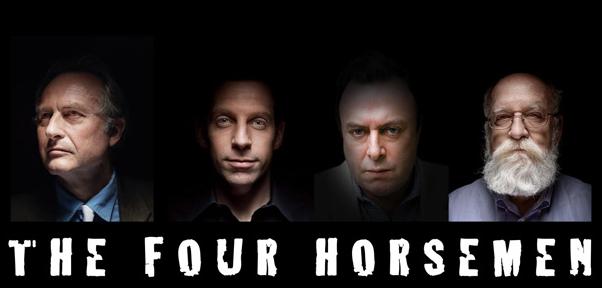
Being an atheist is for white folks? Sam Harris, Richard Dawkins, Christopher Hitchens, and Bill Maher—all notable white men—were the most prominent atheists in the media. I’ve extensively studied these men’s perspectives through books and documentaries. Unfortunately, many of these well-known white male atheists were complete jerks or biased. Most of these men centered their attention on what they called Islam’s destruction of the West. Muslims are not a source of worry for me or many fellow black heathens. I’m more troubled by Trump and Elon Musk, who’ve aligned themselves with the Christian Right Wing in the United States under the Republican Party.
The early 21st-century “New Atheist” movement lacked diversity, and its participants showed prejudice through biased views of Muslims and Middle Easterners. I might add that a lot of Muslims are black, like me. It’s racist to condemn an entire culture for the actions of a few henious individuals. Plus, years ago, Bill Maher, with his many bad takes, stated that former NFL Quarterback Colin Kaepernick was an ‘idiot’ since he used his massive platform to protest against police violence toward black people. Sorry, Bill Maher you’re an arrogant bigot! How is a man an idiot for using his status to highlight the struggle of people who look like him in the form of peaceful protest. This isn’t a group of people I’d want to be aligned with these days. Their bigotry overshadowed their supposed brilliance.
I finished my original post by assuring doubters in the Black community they weren’t alone. The point of this newest post shows you don’t have to align with white male bigots to be a part of the atheist community even if you agree with some of their takes on religion. And you can still be a part of the black community even if you forego religious communion. The media’s “New Atheist” group accurately represented not all atheists who were white. Every group of people has their own bunch assholes. Yet, to my fellow black heathens you’re not alone. Among notable Black atheists and skeptics are James Baldwin, Angela Davis, Huey P. Newton, Hannibal Buress, Eric André, Lorraine Hansberry, Stokely Carmichael, and Zora Neale Hurston, to name a few.

There are groups we black atheists and non-believers can join and support. Organizations like:
African Americans for Humanism
Black Atheists of America
Black Free Thinkers
Black Skeptics Los Angeles
London Black Atheists
We black atheists are not alone, and we are legion. I plan to continue using my Sundays for sleeping in, watching the Chicago Bears lose, rollerblading, hiking, and other leisure activities. Black heathens Unite!
 Evolving Folks Project